
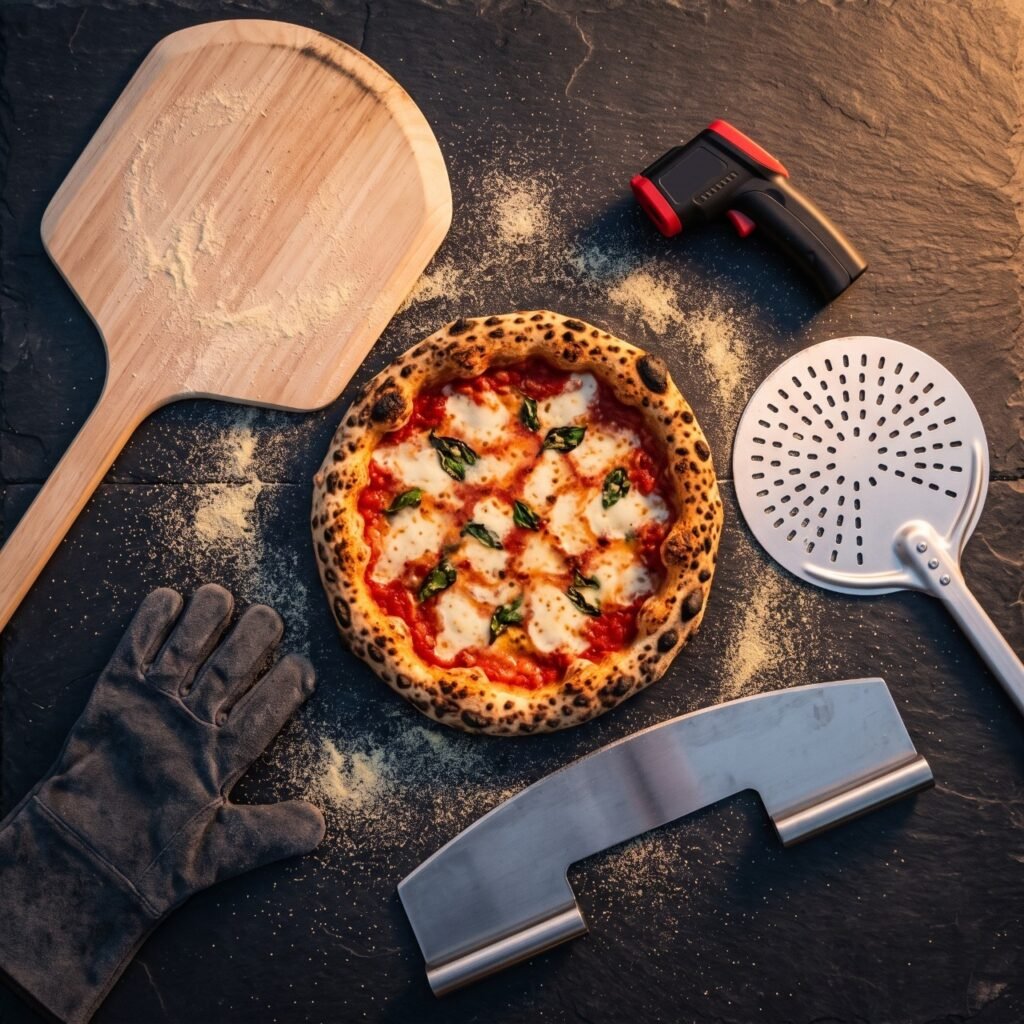
You bought the oven. You watched it hit 900°F. And then your first pizza welded itself to the peel, folded in half on the launch, and came out with one side raw and the other side charcoal.
Here’s the thing nobody mentions in the pizza oven reviews: the oven is maybe half the equation. The other half is a handful of unglamorous tools that cost less than a large pepperoni delivery. Get them right and your third pizza looks like the pictures. Get them wrong and you’ll blame the oven.
At KitchenRecap, we already ranked the 7 best outdoor pizza ovens. This is the companion piece: the seven accessories that actually change what comes out, cross-referenced across every major independent test and thousands of Amazon reviews. Almost all of them cost under $50.
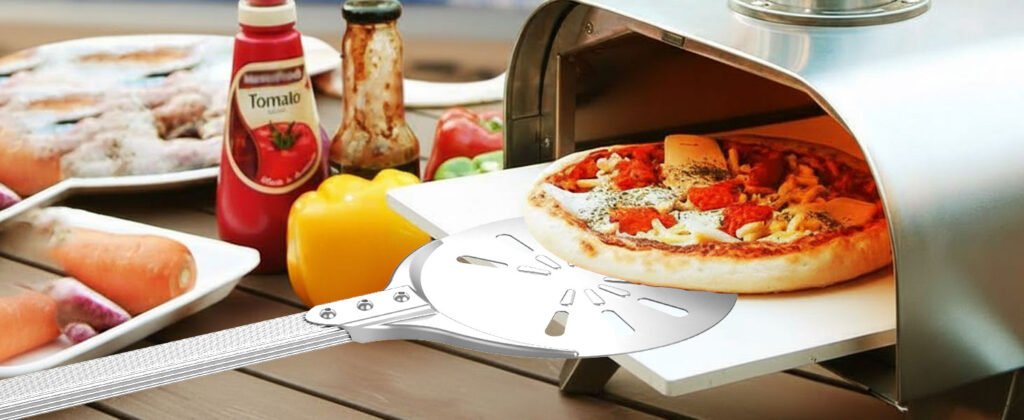
Quick Picks: The Pizza Kit at a Glance
| Tool | What It Fixes | Priority |
|---|---|---|
| Wooden launch peel | Dough sticking, failed launches | Essential |
| Perforated turning peel | One-sided burn, burnt flour taste | Essential |
| Infrared thermometer | Raw centers, scorched bottoms | Essential |
| Pizza steel or stone | Soggy crust in a home oven | If no pizza oven |
| Dough proofing boxes | Dough you can’t stretch | High |
| Pizza rocker cutter | Dragged toppings, torn crust | Nice to have |
| Heat-resistant gloves | Your knuckles | Nice to have |
1. The Wooden Launch Peel: The One That Fixes Sticking
The single most common pizza-night failure is the launch, and it’s almost always a peel problem. Wood is the answer for building and launching: its slightly porous surface gives raw dough something to grip so it doesn’t slide off while you’re topping it, then releases cleanly with a little flour or semolina. A metal peel under raw dough is a slip-and-slide disaster.
Independent testers converge on this hard. As one comparison put it plainly: if you only buy one peel and you launch raw dough, go wood. Look for basswood, a blade around 14×16 inches, and a handle long enough to keep your forearm out of a 900°F mouth. The restaurant-supply models are the value sweet spot — one popular foodservice peel has held a strong rating across more than 11,000 reviews.
- Price range: $25-40
- Skip if: You only ever cook frozen or pre-made pizzas on a tray.
👉 Wooden pizza peels on Amazon

- Sturdy, durable, and lightweight basswood with a fine, even texture ensures our peels are less prone to cracking & free …
- Wood peels feature a tapered half-inch blade designed to easily slide under, and lift pizza from a distance
- Smooth even texture keeps peels free of secreting oils that make their way into your food, separating this product from …
2. The Perforated Turning Peel: The Fix for One-Sided Pizza
In a real pizza oven, the flame is on one side. Your pizza cooks unevenly unless you rotate it every 20-30 seconds — and you cannot do that with a big wooden board. You need a small round metal peel, and it should be perforated.
The perforations aren’t a gimmick. They let excess flour fall away instead of burning on the oven floor, which is exactly where that acrid, bitter taste on the bottom of your crust comes from. Testers who’ve run peels through high-heat ovens single out perforated metal as the fix for the burnt-flour problem, and pros describe the same combination of benefits: the perforations allow airflow to prevent sticking and let excess flour fall away before it burns.
This is the accessory most beginners skip, and the one that most visibly upgrades their pizza.
- Price range: $30-45
- Look for: 9-12 inch round aluminum blade, long heat-resistant handle.
👉 Perforated turning peels on Amazon
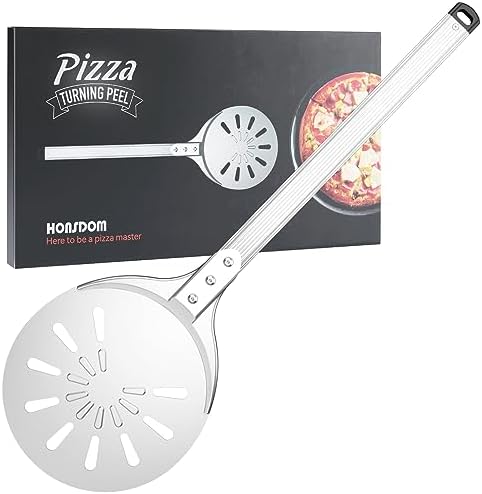
- Master Perfect Turning for Even Baking. The compact 8-inch round head is specifically designed for maneuvering pizzas in…
- Premium Hard-Anodized Aluminum Construction. Crafted from commercial-grade, corrosion-resistant aluminum with a sandblas…
- Long, Heat-Resistant Handle for Safe Reaching. The extended handle keeps your hands and arms safely away from scorching …
3. The Infrared Thermometer: Stop Guessing at 900°F
Your pizza oven’s built-in gauge (if it has one) measures air temperature. Your pizza cooks on the floor. Those two numbers can differ by hundreds of degrees, and that gap is why your first pizza had a scorched bottom and a pale, doughy top.
An infrared thermometer solves it in one second: point, read the stone, launch when it’s right. It’s also the tool that makes a home oven setup work — every serious testing protocol relies on one, with reviewers noting that a steel or stone should read at least 500°F before a pizza goes anywhere near it. Aim for around 750-850°F on a pizza oven floor for Neapolitan, 550-650°F for New York style.
Infrared guns are consistently among Amazon’s best-selling thermometer categories, and the models that read up to 1000°F+ cost under $30.
- Price range: $20-35
- Look for: 1000°F+ range (many cheap units cap at 500°F and are useless here).
👉 Infrared thermometers for pizza ovens on Amazon
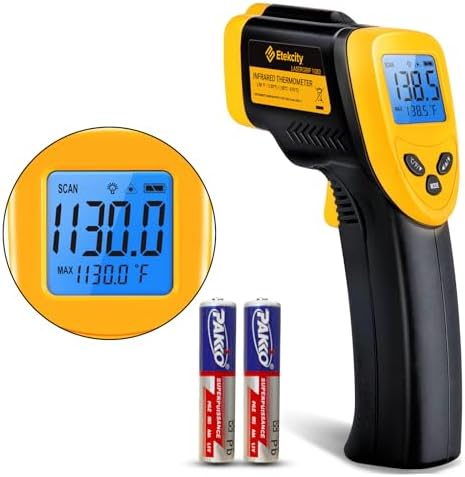
- 𝐖𝐢𝐝𝐞 𝐓𝐞𝐦𝐩𝐞𝐫𝐚𝐭𝐮𝐫𝐞 𝐑𝐚𝐧𝐠𝐞: Measure a temperature range from -58°–1130°𝙁 / -50°–610°𝘾 𝙖𝙣𝙙 𝙜𝙚𝙩 𝙮𝙤𝙪𝙧 𝙧𝙚𝙨𝙪𝙡𝙩 𝙞𝙣 0.5 𝙨𝙚𝙘𝙤𝙣𝙙𝙨; Th…
- 𝐕𝐞𝐫𝐬𝐚𝐭𝐢𝐥𝐞 𝐓𝐨𝐨𝐥𝐬: Infrared technology allows you to measure the surface temperature of objects with temperatures above bo…
- 𝐏𝐫𝐨𝐟𝐞𝐬𝐬𝐢𝐨𝐧𝐚𝐥 𝐄𝐌𝐒 𝐌𝐨𝐝𝐞: The Lasergrip 1080 temperature gun has an emissivity range of 0.1–1.0 for precise readings across…
4. Pizza Steel or Stone: Only If You’re Baking Indoors
Important distinction most guides blur: if you own a proper pizza oven, you don’t need this. Your oven already has a cooking floor. This one is for the indoor oven — and there, it’s the single biggest upgrade available, turning a 500°F kitchen oven into something that can produce real crust.
Steel versus stone comes down to one property. Carbon steel conducts heat dramatically faster than ceramic, which is what produces those crisp, leopard-spotted bottoms at lower oven temperatures. Stone is cheaper, lighter, more forgiving, and bakes a bit softer — great for bread too. Steel costs more and weighs a lot.
Whichever you choose, preheat is non-negotiable: an hour with the steel or stone in place before the first pizza, and five minutes of recovery between pies.
- Price range: $35-60 for stone, $80-120 for steel
- Measure first: Leave an inch of clearance on every side inside your oven.
👉 Pizza stones and steels on Amazon
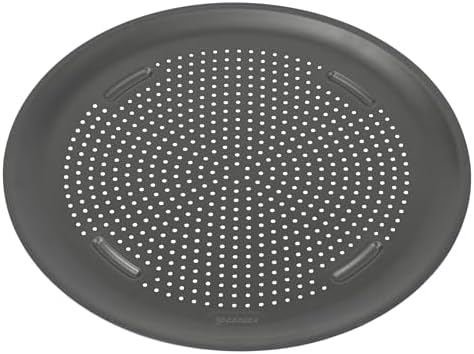
- 16″ PERFORATED PIZZA PAN: Designed with a perforated edge and even heating technology, this pizza pan reduces moisture a…
- VERSATILE USES: Great for baking homemade pizzas, frozen pizzas, and leftover slices, this versatile cooking pan is an e…
- EFFICIENT DESIGN: This pizza tray features convenient cutting guides that make it easy to serve perfect, even slices, ev…
5. Dough Proofing Boxes: Where Good Dough Comes From
Nobody’s exciting purchase, and yet: dough that’s been balled and cold-fermented in a proper proofing box stretches into a round without tearing, while dough crammed in a mixing bowl under plastic wrap comes out as a stiff blob with a skin on it.
Stackable proofing boxes hold 4-6 dough balls in the fridge for a 24-72 hour ferment — which is also where nearly all the flavor in good pizza dough comes from. This is the cheapest flavor upgrade in pizza.
- Price range: $25-40 for a set
- Look for: Stackable, airtight lids, sized to fit a fridge shelf.
👉 Pizza dough proofing boxes on Amazon

- COMMERCIAL QUALITY: Our dough proofing boxes are generously sized at 17.25 x 13 x 3.54″ with covers and sturdy enough to…
- BPA FREE: With our food grade white plastic, you can rest assured your customers are being served the highest quality br…
- BUILT TO LAST: Durable construction with covers, our proofing boxes will become a staple in your kitchen for years to co…
6. The Rocker Cutter: Because the Wheel Drags
A pizza wheel pushes toppings around and drags the cheese into a smear, especially on a thin Neapolitan base. A rocker knife cuts straight down through crust in one press. It’s a small thing, but it’s the difference between slices and wreckage on the serving board.
- Price range: $15-30
- Look for: 14+ inch blade, comfortable two-handed grip, blade guard for storage.
👉 Pizza rocker cutters on Amazon

- QUICK CUTTING: This super sharp pizza slicer is designed for heavy use with little effort, for the slice every time
- SAFE STORAGE: The blade comes with a holster as well as a cover to keep your pizza cutter rocker from slicing anything i…
- SAVE TOPPINGS: Never lose your pepperoni again! Our 14″ x 3.5″ pizza knife is easy to use and cuts rights through your t…
7. Heat-Resistant Gloves: Cheap Insurance
You will reach into a 900°F oven mouth. Standard oven mitts are rated for a fraction of that, and they’re bulky exactly when you need dexterity. Welding-style or aramid-fiber gloves rated to 900°F+ cost about $20 and are the only item on this list that protects something you can’t reorder.
- Price range: $15-25
- Look for: 900°F+ rating, long cuff past the wrist, actual finger movement.
👉 Heat-resistant pizza oven gloves on Amazon
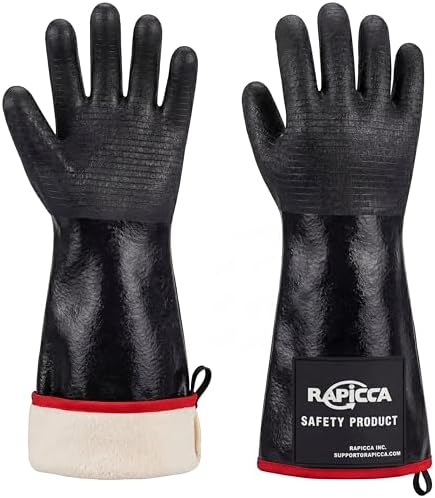
- Excellent Oil & Heat Resistance: Crafted from Food-Grade neoprene rubber, these gloves boast outstanding resistance to w…
- Comfortable Firm Grip: Designed for pit masters, this glove features a double-layer insulated liner and a textured palm,…
- Smooth Hot Liquid & STEAM Management: Experience effortless food extraction from hot boiling water or steam with these g…
The Two-Peel System (What Separates Beginners From Everyone Else)
If you take one idea from this article, take this one: experienced pizza makers use two peels, not one. A wooden peel to build and launch, a small perforated metal peel to turn and retrieve. It’s the setup every pro recommends, and it’s the reason your pizza comes out evenly cooked instead of half-burnt.
Buying one do-it-all peel is the most common accessory mistake. A wooden blade is too thick to slide under a finished pizza, and a metal blade is too slick to launch a raw one. Two peels, about $60 total, and pizza night stops being a wrestling match.
The Verdict: What to Buy First
- Just unboxed a pizza oven? Wooden launch peel + perforated turning peel + infrared thermometer. That’s the trio, roughly $85, and it fixes 90% of first-month problems.
- Cooking pizza in your kitchen oven? Steel or stone first, then the peels. Nothing else moves the needle as much.
- Already making decent pizza? Proofing boxes. Better dough beats better gear every time.
- Skip for now: Branded oven-specific bundles that repackage generic tools at a premium.
Your oven can hit 900°F. These are the tools that let you actually use it.
The oven is only half the setup. A wooden peel to launch, a perforated turning peel to rotate, and an infrared thermometer to read the actual floor temperature will fix most first-month pizza problems — and each one costs less than a delivery order. We compared and ranked all of them in our guide to the 7 pizza oven accessories that actually change your pizza, including the two-peel system that separates beginners from everyone else.
FTC Disclosure: As an Amazon Associate, I earn from qualifying purchases. This means if you click on a link and make a purchase, I may receive a small commission at no extra cost to you. We only recommend gear we’d use on our own pizza night.