The Safest Material for Cooking Utensils: What Expert Chefs Actually Use
 Silicone can handle extreme heat up to 482°F (250°C). Plastic starts to melt at just 350°F (175°C). This dramatic difference emphasizes why silicone stands out as the safest material for modern kitchen utensils . Kitchen tool selection matters more than personal preference these days, especially since a newer study showed that black plastic utensils contain harmful flame retardants that could seep into food .
Looking for non-toxic cooking utensils can feel overwhelming. Silicone provides great durability and resists stains well . Yet research shows that 82% of silicone kitchen tools contain concerning additives, including chemicals that disrupt hormones . Wood gives you another option – quality wooden utensils can last for decades if you take good care of them . Stainless steel durability varies quite a bit. Some pieces last forever while others show signs of wear as time passes .
This piece dives deep into what makes utensil materials safe. We’ll look at common options through important safety factors and share what professional chefs use in their own kitchens. You’ll learn to pick the safest cooking utensils that match your needs and spot food-grade materials that protect your health properly.
What Makes a Cooking Utensil Material Safe?
Safety in cooking utensils goes beyond durability. Your health depends on materials that won’t break down during use. Let’s look at what makes some materials safer than others and help you pick the best options for your kitchen.
Heat resistance and chemical stability
A cooking utensil’s safety starts with knowing how to handle high temperatures without breaking down. Stainless steel stands out as one of the safest choices. It stays stable at temperatures between 500-600°F. Cast iron does even better and can handle temperatures up to 1500°F .
Heat resistance plays a big role because materials that break down under high heat can release harmful compounds into your food. Silicone works well up to 450°F, which makes it good for most cooking. But not all silicone is the same. Platinum-cured silicone gives better heat resistance with fewer fillers.
In stark comparison to this, regular plastics start breaking down at much lower temperatures. This is a big deal as it means that damaged nonstick pans release about 9,100 microplastic particles each time you use them. These particles could end up in your meals.
Chemical stability is just as vital. Aluminum cookware might be popular, but it reacts with acidic foods. The metal can seep into your meals. Manufacturers solved this by creating anodized aluminum, which adds a non-reactive layer that cuts down on leaching by a lot.
Toxicity concerns: BPA, phthalates, and heavy metals
Many toxic compounds show up in cooking utensils that can affect your health:
- Heavy metals: Lead can cause serious health problems even in small amounts. Kids and unborn babies face the biggest risks [5]. Research shows some aluminum cookware had lead levels above 3.2g/kg, way above what’s safe.
- Phthalates: These chemicals make plastic flexible but leak into food. They’ve been used in food packaging and are linked to problems with development and reproduction.
- Bisphenols: BPA and similar chemicals mess with hormones and are tied to developmental issues and early puberty. The replacements for BPA often cause similar health issues.
- PFAS: These “forever chemicals” in nonstick coatings link to cancer and reproductive problems . About 99% of Americans now have PFAS in their blood.
Black plastic utensils need extra caution. They often contain brominated flame retardants. The EPA banned some of these in 2021 because of health risks.
Food-grade certifications to look for
The safest cooking utensils come with proper certifications. NSF certification leads the industry. It sets standards for commercial food equipment that work great for home kitchens too.
NSF standards look at three key things: material safety to prevent chemical leaching, design construction for easy cleaning, and how well products perform. U.S. food contact materials must also follow FDA rules (21 CFR) about chemical makeup and safety.
European products should meet EU Framework Regulation No. 1935/2004. This rule makes sure materials touching food get complete safety testing.
Look for clear food-grade labels like “food grade GB9684” on stainless steel items. Good stainless steel should show grade marks like 304 (18% chromium+8% nickel) or 316 (with added molybdenum to resist salt).
It’s worth mentioning that food-grade certification means something’s safe for food contact but doesn’t always guarantee it can handle high heat. Always check both food-grade status and temperature limits of your cooking utensils.
Overview of Common Cooking Utensil Materials
Picking the right kitchen tools means you need to know what different materials can do. This knowledge helps you pick the safest cooking utensils that work best for you. Each material comes with its own strengths and limits that affect how well it works and how safe it is.
Silicone: flexible and heat-resistant
Silicone utensils have become a popular choice for non-toxic cooking in recent years. These tools are made from a synthetic polymer that contains silicon, oxygen, carbon, and hydrogen, which is different from regular petroleum-based plastics. Good quality food-grade silicone can handle temperatures between 400-600°F, so it works great for most cooking tasks.
Silicone’s gentle touch with cookware makes it stand out. Your expensive non-stick pans won’t get scratched like they might with metal tools. The flexibility of silicone lets you scrape every last bit from bowls and pans.
All the same, silicone products aren’t all equally safe. Research has shown that chemicals can leak from silicone at temperatures above 150°C (302°F). You should look for “medical grade” or “platinum-cured” products to get the best quality silicone with fewer chemical fillers.
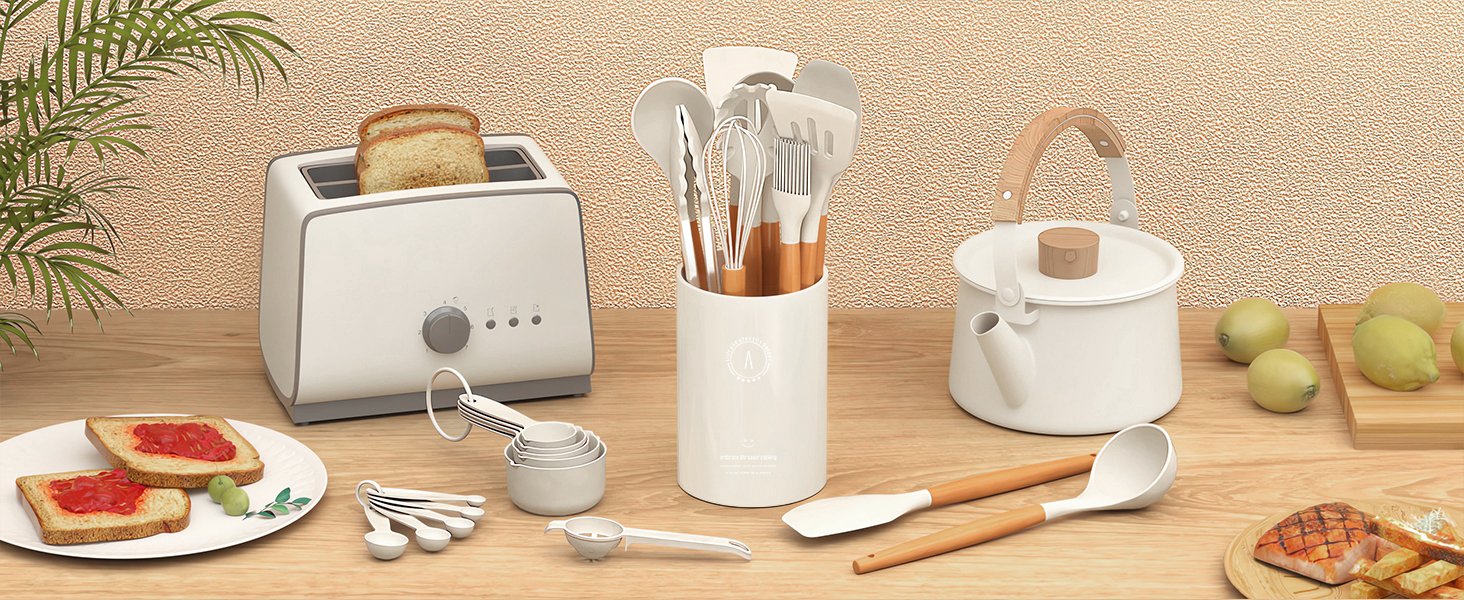
Plastic: affordable but risky
Plastic utensils might be cheap, but they come with several safety concerns. The biggest problem is that they can get soft or melt when they get too hot. This means tiny pieces of plastic might end up in your food. Black plastic utensils need extra attention – a newer study, published in 2018 by researchers found that 40% had toxic chemicals, including flame retardants. Some samples had 30 times more than what’s considered safe.
On top of that, plastic cooking tools often chip and crack as you use them. These damages don’t just make them wear out faster – they create spaces where bacteria can grow and chemicals can seep out. Some plastics have hormone-disrupting phthalates that make them flexible.
Plastic utensils don’t last as long as other materials, so they end up costing more over time even though they’re cheap to buy.
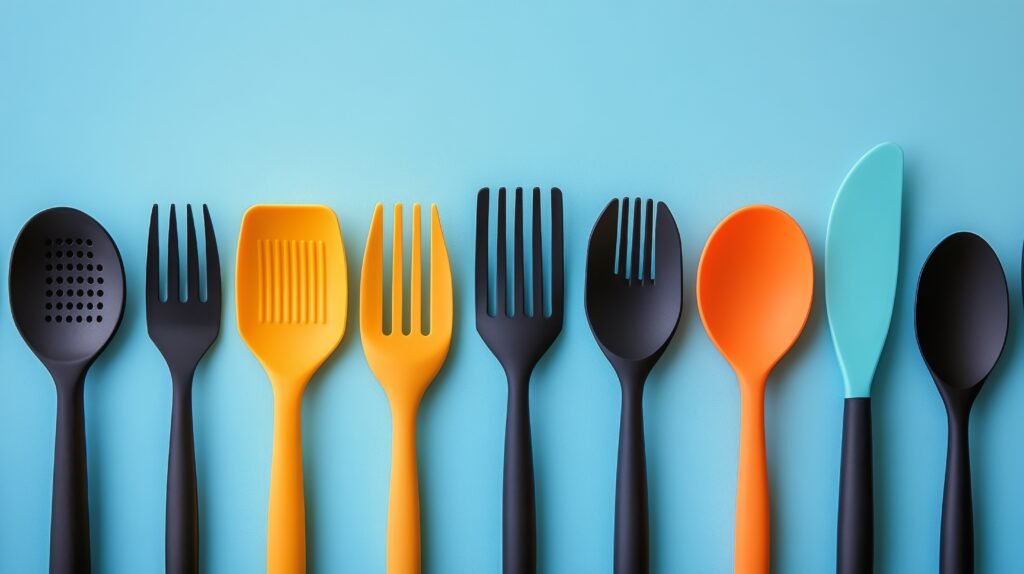
Wood: natural and biodegradable
Wooden utensils are among the oldest and most reliable kitchen tools you can get. Quality wooden spoons last many years if you take care of them. Wood’s smooth, soft surface won’t harm your cookware, which helps protect non-stick coatings.
Wood has some surprising benefits too. It naturally fights bacteria. Wood’s porous structure pulls in bacteria and traps them, and they die within hours. This makes well-maintained wooden utensils remarkably clean.
Heat doesn’t travel through wood easily, so wooden handles stay cool even if you leave them in a hot pan briefly. Unlike metal utensils, wood won’t change cooking temperatures or burn your hand.
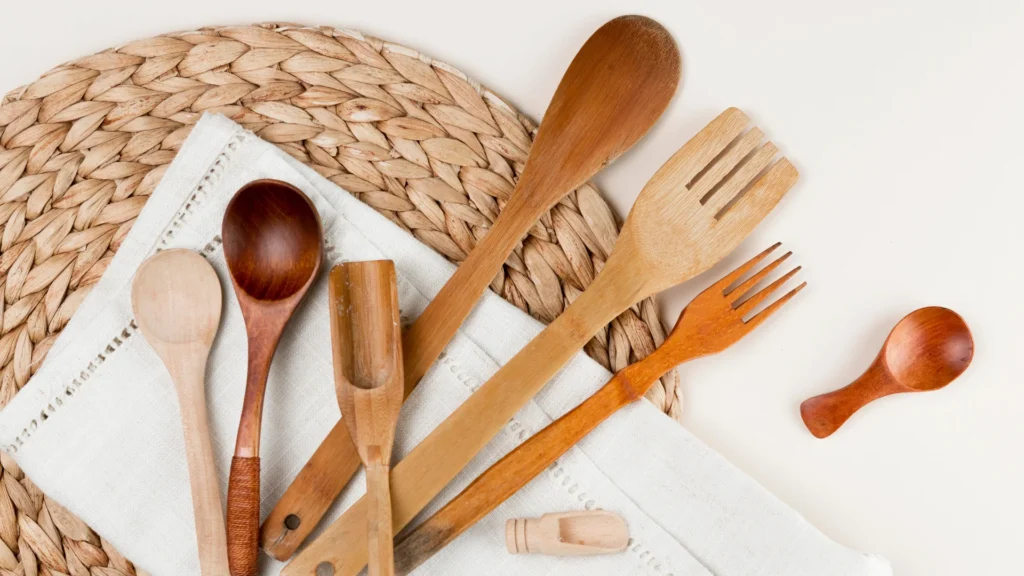
Bamboo: sustainable and lightweight
Bamboo utensils offer the same great features as wooden tools plus some extra environmental benefits. Bamboo grows incredibly fast – up to 4 feet in just 24 hours – and you can harvest it in 3-5 years, while regular hardwoods take 30-40 years. Bamboo doesn’t need any pesticides or fertilizers to grow well.
The physical properties of bamboo make it perfect for kitchen tools. It’s stronger than steel when it comes to tensile strength (28,000 pounds per square inch compared to steel’s 23,000). This makes bamboo utensils tough but light.
These tools handle heat well and keep their handles cool. They resist stains and smells thanks to their natural antibacterial properties, so your food tastes exactly as it should.
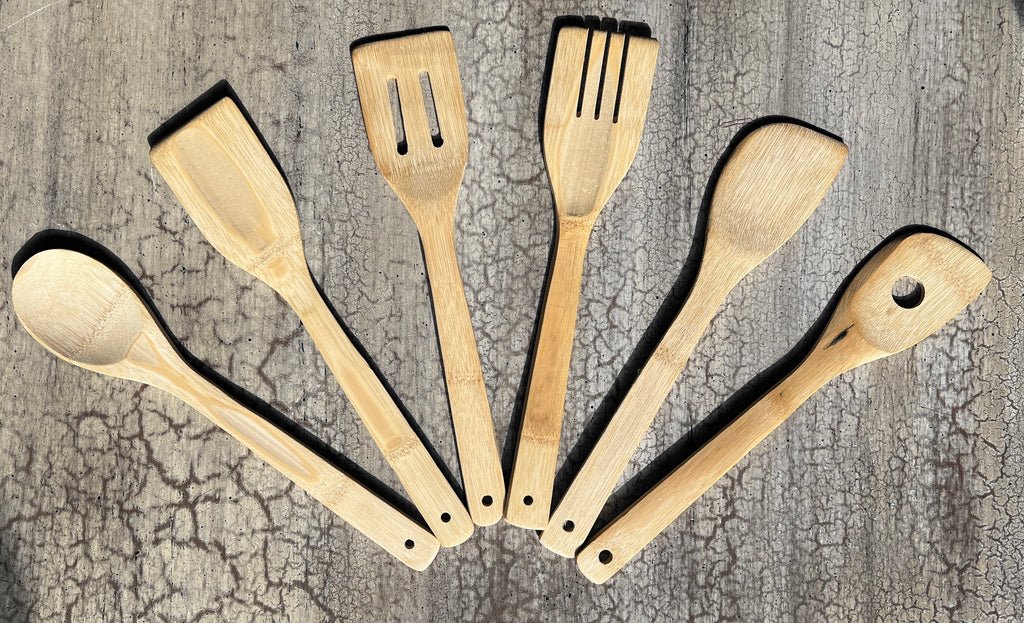
Stainless steel: durable and non-reactive
Professional chefs often choose high-quality stainless steel as their go-to material for long-lasting, safe cooking utensils. Good stainless steel contains about 10% chromium plus varying amounts of nickel and iron. It won’t react with acidic foods or release harmful chemicals during regular use.
You can tell stainless steel’s quality by its grade. The best cooking utensils use 304 (18/8) or 316 (surgical grade) steel. These grades resist corrosion better and last longer than 200-series or 400-series options.
Just remember one thing: don’t use stainless steel utensils with non-stick cookware because they can scratch the coating. Silicone or wood tools work better for these surfaces and help your cookware last longer.
Comparing Materials by Key Safety Factors
Let’s review the best materials for cooking utensils based on specific safety criteria. Here’s how common materials stack up against five key factors that determine their safety in your kitchen.
1. Heat resistance
Heat resistance plays a vital role in keeping kitchen tools safe. Stainless steel works exceptionally well and handles temperatures between 500-600°F. Cast iron does even better with specialized varieties that can take heat up to 1500°F.
Silicone sits in the middle range and handles heat up to 450°F before it starts breaking down. Plastic materials raise safety concerns because most types start to deform at just 350°F. Nylon does a bit better and stays stable up to about 400°F .
Wooden and bamboo utensils give you enough heat resistance for most cooking tasks without getting hot handles.
2. Chemical leaching risk
Materials react differently to heat and acidic foods. Non-anodized aluminum leaches the most, followed by anodized aluminum, then steel. Copper shows the least amount of leaching. This becomes a bigger issue with acidic ingredients that speed up metal transfer into food.
Black plastic utensils need extra attention. Research shows many contain flame retardants that can get into food. High-quality stainless steel stays non-reactive even with acidic ingredients, making it one of your safest choices.
3. Durability and wear
Silicone utensils last way longer than plastic when it comes to staying in one piece. Plastic tools chip, crack, and get brittle with regular use. Silicone keeps its flexibility and doesn’t warp.
Wooden utensils last a long time but might splinter if you don’t take care of them. Stainless steel lasts the longest and gives you the best value despite costing more upfront.
4. Ease of cleaning
Each material needs its own cleaning approach. Stainless steel makes cleanup a breeze and usually goes right in the dishwasher. Silicone also shines here with its non-stick surface that fights off stains and smells.
Wooden and bamboo utensils ask for more attention. You’ll have to wash them by hand, dry them right away, and give them occasional oil treatments to stop them from drying out or cracking. This care keeps them looking good and safe to use.
5. Environmental impact
Bamboo tops the list for eco-friendliness. It grows faster and doesn’t ask for fertilizers or pesticides. Wooden utensils also rank high in sustainability because they break down naturally at the end of their life.
Stainless steel can’t break down naturally, but you can recycle it forever without losing quality. This gives it solid eco-friendly credentials. Silicone comes with mixed environmental effects – it lasts long but won’t break down naturally and has limited recycling options.
What Expert Chefs Actually Use in Their Kitchens
Professional kitchens show us what is the safest material for cooking utensils through their daily operations. Restaurant kitchens choose materials based on performance, longevity, and food safety rather than following trends.
Why chefs prefer stainless steel for durability
Stainless steel tools dominate professional kitchens because they last longer and work better. These tools handle the intense pressure of busy kitchens without breaking down. The exceptional strength of stainless steel means you’ll replace them less often, which saves money despite higher initial costs. Chefs love stainless steel’s non-reactive nature. Food never picks up unwanted flavors, even with acidic ingredients. The material stands up to rust and corrosion in fact, making it perfect for hot, humid restaurant environments. Professional kitchens look elegant because stainless steel maintains its appearance even after heavy use.
Silicone for non-stick cookware
Professional chefs reach for silicone utensils to protect expensive non-stick surfaces. These flexible tools prevent scratches that would damage non-stick coatings. Silicone tools can handle high temperatures without melting, which makes them great for almost any cooking task. The material cleans up easily and keeps its shape over time. It doesn’t absorb stains or odors. Chefs appreciate silicone’s flexibility for precise tasks but find it less useful to flip larger items like steaks.
Wood and bamboo for gentle stirring
We used wood and bamboo utensils in professional kitchens because they treat cookware gently. These natural materials offer unique benefits – they’re strong enough for thick stews yet soft enough to protect delicate pan surfaces. Wooden spoons stay cool to touch, which means no burned hands during cooking. Most professional kitchens keep wooden or bamboo tools specifically for non-stick cookware. These materials help pans last longer by preventing scratches. Bamboo often wins over wood because it’s stronger for its weight and naturally fights bacteria.
Avoiding plastic in professional kitchens
Professional kitchens now remove plastic utensils completely. Chef Edward Lee’s nonprofit restaurant Shia eliminated plastic tools as part of their green business practices. His staff stores sauces in separate containers and mixes vinaigrettes as needed instead of using plastic squeeze bottles. Moving away from plastic creates challenges – alternative materials cost more, and items like glass just need more careful handling. Notwithstanding that, kitchen professionals know plastic tools break down under high heat and might release toxic chemicals. The move away from plastic created positive changes among staff members who now bring these green practices to their home kitchens.
Best Material for Specific Cooking Needs
Selecting the right utensil for specific cooking tasks is just as important as choosing quality cookware. Different materials shine in different applications and ensure both safety and the best cooking results.
High-heat cooking: stainless steel or silicone
Silicone stands out for high-temperature cooking and can handle heat up to 428°F without releasing toxins into food. Stainless steel stays stable even at extreme temperatures, which makes it perfect for searing and stir-frying. Professional kitchens rely on these materials because they handle heat so well. You should avoid nylon utensils since they only handle heat up to 392°F.
Non-stick cookware: silicone or wood
Your non-stick surfaces need gentle utensils that won’t damage delicate coatings. Silicone’s flexibility makes it a great choice – it’s soft yet tough enough to scrape pans clean. Wood and bamboo work great too, and they help preserve your cookware’s non-stick properties. Nylon can actually be quite abrasive despite what the packaging says about being non-stick safe. Natural materials do a better job protecting your investment.
Baking: silicone spatulas and whisks
Silicone tools with beveled edges help bakers scrape every bit from their bowls. Quality silicone spatulas can handle oven temperatures up to 600°F you can stir hot mixtures safely. Many bakers love silicone whisks because they’re flexible and won’t scratch delicate bakeware.
Serving: bamboo or wood utensils
Bamboo and wood make excellent serving tools – they’re light and look great too. FSC-certified bamboo gives you an environmentally responsible option, while wooden servers keep food at the right temperature without changing its taste. These materials stay cool to touch even after serving hot food, which makes the experience better for everyone at the table.
Conclusion
Your specific kitchen needs and cooking style will determine the safest cooking utensils. This piece gets into different materials based on significant safety factors like heat resistance, chemical stability, and durability. Without doubt, each material has its own advantages in different cooking scenarios.
Stainless steel emerges as the most durable choice. It withstands extreme temperatures and doesn’t leach chemicals into food. Professional chefs use these tools every day because they last forever with proper care. High-quality silicone offers excellent heat resistance up to 450°F and protects non-stick surfaces from scratches.
Natural materials like wood and bamboo deserve a spot in your kitchen arsenal. These gentle tools preserve cookware and offer surprising antibacterial properties. They also leave a smaller environmental footprint than synthetic alternatives.
The evidence steers us away from plastic utensils. They melt, crack, and might release harmful chemicals. This makes them the least desirable choice, even though they’re cheap.
Building a thoughtful collection makes more sense than picking just one material. Stainless steel handles high-heat cooking best. Silicone works great with non-stick surfaces. Wood and bamboo excel at gentle stirring and serving. This approach will give you the right tool that puts food safety and cooking performance first.
The safest kitchen doesn’t need trendy materials. Quality tools that match specific tasks matter more. Investing in well-made utensils from safer materials protects your health and cookware for years. The tools we use affect the food we eat and then our overall wellbeing.
🧑🍳 Editor’s Note
Choosing safe and durable cooking utensils can feel overwhelming with so many options out there — but don’t worry, we’ve done the homework for you. Below, you’ll find our editor’s top picks for the most reliable, non-toxic, and chef-approved utensils available on Amazon.
Each product was selected for its material quality, heat resistance, and everyday practicality — the perfect blend of safety and performance for any modern kitchen.




| Product Name (Amazon) | Material Type | Editor’s Pick – Here’s Why | Price |
|---|---|---|---|
| Berglander Stainless Steel Utensils Set (13-Piece) | Stainless Steel | Professional-grade build with a polished finish that stays beautiful for years. It’s sturdy, balanced, and dishwasher-safe — a true kitchen staple. | 26,99 $ |
| Umite Chef Kitchen Cooking Utensils Set, 33 pcs Non-Stick Silicone Cooking Kitchen Utensils Spatula Set with Holder, Wooden Handle | Food-Grade Silicone | BPA-free food-grade silicone with wooden handles, high heat resistance (up to ~230 °C/446 °F), and a complete 33-piece set — ideal for non-stick cookware and safe everyday use. | 21,66 $ |
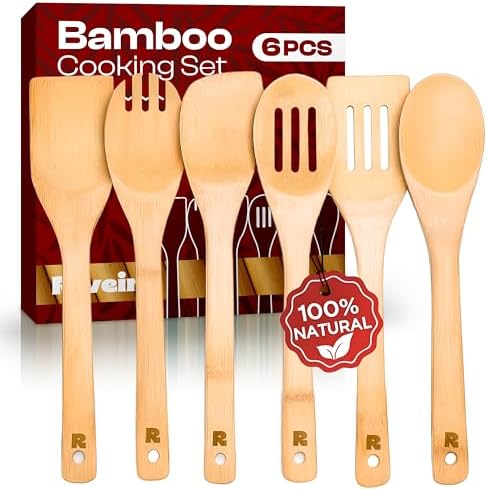
| Riveira Bamboo Cooking Spoons Set (6-Piece) | Bamboo | Eco-friendly, non-toxic bamboo that’s safe for all cookware and adds a natural touch to your kitchen. | 9,29 $ |
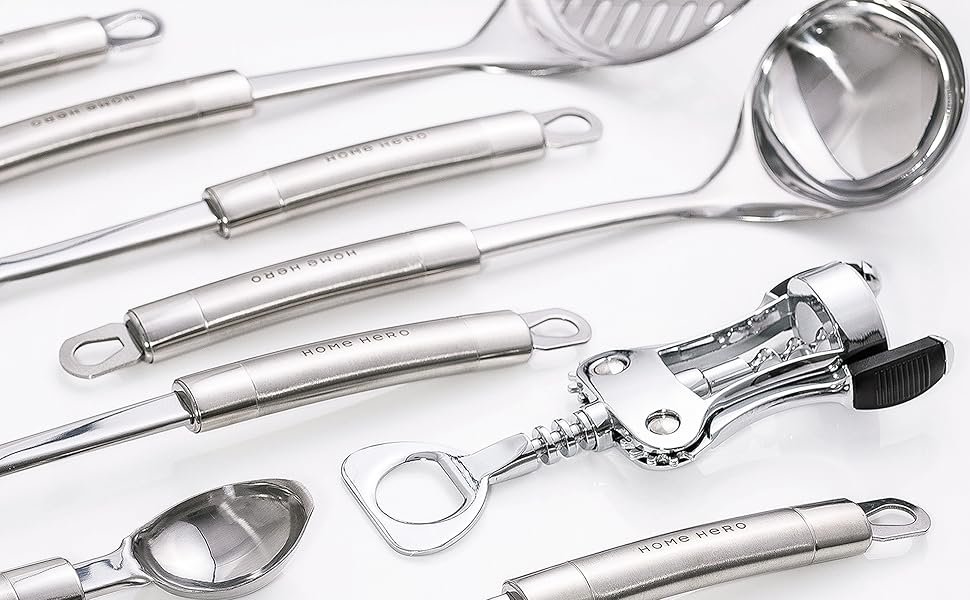
| Home Hero Stainless Steel Kitchen Set (54-Piece) | Stainless Steel | A complete, zero-plastic upgrade for serious cooks. With 54 pieces, you’ll never reach for a plastic spatula again. | 79;99 $ |
| U-Taste High-Heat Silicone Utensil Set (5-Piece) | Premium Silicone | Compact, minimalist, and built for performance — handles up to 446°F (230°C) with no smell, melt, or stain. | 24,99 $ |